
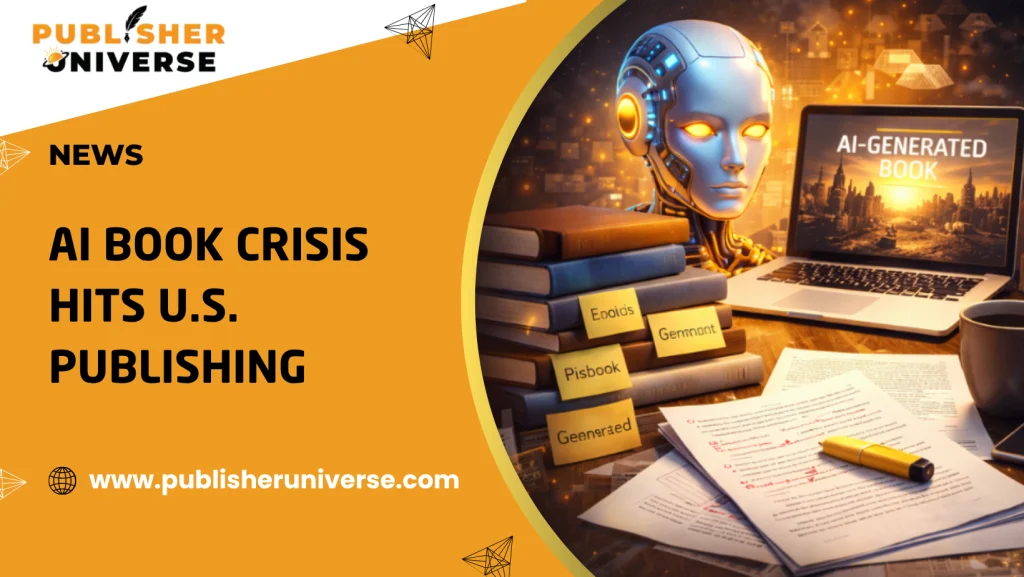
Publishing Industry Faces Turning Point Amid AI Debate
The U.S. publishing industry is entering a critical phase as artificial intelligence continues to reshape how books are written, edited, and produced. A recent controversy involving a withdrawn novel has sparked widespread debate, forcing publishers to reevaluate their standards for authorship and authenticity.
The issue came into the spotlight after a major publisher canceled the release of a novel following allegations that the manuscript contained AI-generated content. The decision has triggered industry-wide discussions about transparency, credibility, and the future of creative writing.
Growing Concerns Over AI-Generated Content
Experts say the rapid advancement of artificial intelligence tools has made it increasingly difficult to distinguish between human-written and machine-generated text.
According to reporting by The Guardian, publishers are struggling to reliably detect AI-generated manuscripts, as modern tools can closely mimic human tone, structure, and storytelling techniques.
This technological shift is raising concerns among editors, agents, and readers alike, particularly regarding originality and intellectual integrity.
Publishers Respond to Rising Pressure
In response to the controversy, several publishing houses across the United States are reviewing their editorial policies and submission guidelines.
Industry insiders indicate that publishers are now:
- Strengthening manuscript screening processes
- Introducing stricter disclosure requirements for AI usage
- Emphasizing human authorship and originality
The goal is to maintain reader trust while adapting to rapidly evolving technology.
Trust Crisis Emerging in the Industry
The situation has also contributed to a broader trust issue within the publishing ecosystem.
Organizations such as Authors Guild have issued warnings about the increasing use of AI in both legitimate and fraudulent publishing activities.
In some cases, AI is being used not only to generate content but also to create convincing scam operations targeting authors. These developments are making it harder for writers to identify trustworthy service providers.
AI’s Expanding Role in Publishing
Artificial intelligence is no longer limited to experimental use. It is now being integrated into various stages of the publishing process, including:
- Draft writing assistance
- Editing and proofreading
- Content optimization
- Marketing automation
While these tools offer efficiency, experts warn that over-reliance on AI may compromise creativity and authenticity if not properly managed.
Impact on Self-Publishing Authors
The controversy is particularly significant for self-published authors, who often rely on third-party services to bring their books to market.
With fewer regulatory safeguards in the self-publishing space, authors face increased risks, including:
- Unintentional use of AI-generated content
- Exposure to low-quality service providers
- Difficulty maintaining originality
As a result, many authors are now seeking professional guidance to ensure their work meets industry standards.
Industry Shift Toward Transparency
Analysts believe the publishing industry is entering a new phase where transparency will become a key differentiator.
Publishers and service providers are expected to:
- Clearly disclose the use of AI tools
- Provide verifiable proof of human involvement
- Offer higher-quality editorial oversight
“This is a turning point for publishing,” industry experts say. “Trust and authenticity are becoming the foundation of long-term success.”
What Comes Next?
Looking ahead, the industry is likely to see:
- Development of improved AI detection tools
- Increased regulation and ethical guidelines
- Greater demand for human-led creative services
Despite the challenges, experts agree that AI will remain a permanent part of the publishing landscape—requiring careful balance between innovation and integrity.
Conclusion
The recent AI-related controversy has exposed critical challenges facing the U.S. publishing industry in 2026. As technology continues to evolve, publishers, authors, and service providers must adapt while preserving the core values of originality and trust.
For authors, the message is clear: success in modern publishing depends not only on creativity but also on choosing the right partners and maintaining transparency throughout the process.
Author Advisory
Before publishing your book:
- Verify the originality of your content
- Work with trusted professionals
- Understand how AI tools are being used
In an era where technology can replicate creativity, authenticity has become more valuable than ever.
Start Your Publishing Journey Today – Get a Free Book Consultation with Publisher Universe!