
From Manuscript to Masterpiece: Understanding Book Editing
You’ve finished your manuscript—now what? Many authors think writing is the hardest part, but the real challenge begins with understanding the types of book editing needed to turn a rough draft into a polished, publish-ready book.
If you skip or misunderstand editing, your book risks poor reviews, low sales, and lost credibility. In this complete guide, we’ll break down every major editing type—from developmental editing to copy editing and proofreading—so you know exactly what your book needs and when.
What Are the Types of Book Editing?
What are the types of book editing?
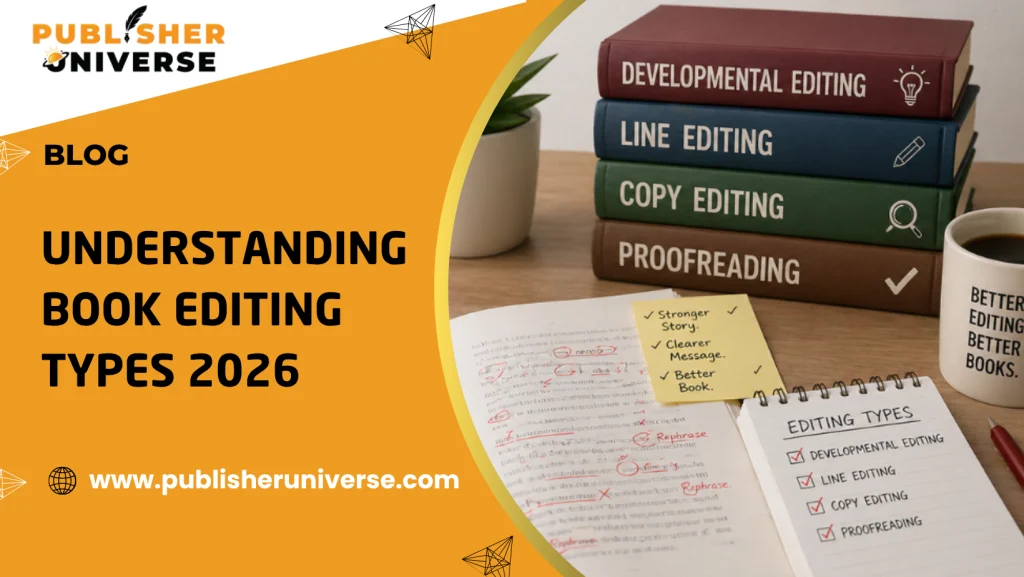
The main stages of book editing are developmental editing, line editing, copyediting, and proofreading.Each stage focuses on different aspects—structure, clarity, grammar, and final polish. Together, they ensure your manuscript is engaging, error-free, and ready for professional publishing.
Why Editing is Essential for Book Success
Editing is not optional—it’s what separates amateur writing from professional publishing.
Key Benefits of Editing
- Improves clarity and readability
- Eliminates grammar and spelling errors
- Strengthens story structure and flow
- Enhances reader experience
- Increases credibility and sales
Even bestselling authors rely on professional editors to refine their work.
Developmental Editing (Big Picture Editing)
What is Developmental Editing?
What is developmental editing?
Developmental editing focuses on the overall structure, content, and flow of your book. It examines plot, pacing, character development (for fiction), and logical organization (for nonfiction). This type of editing helps shape your manuscript into a compelling and coherent story.
What Developmental Editors Do
- Analyze story structure or content flow
- Identify plot holes or weak arguments
- Improve pacing and organization
- Suggest major rewrites or restructuring
When You Need It
- Early draft stage
- Complex books (novels, memoirs, business books)
- If your story feels unclear or disorganized
Example: A novel with strong ideas but confusing pacing needs developmental editing first.
Line Editing (Style and Flow Improvement)
Line editing focuses on how your writing sounds and flows.
What Line Editors Improve
- Sentence structure and rhythm
- Tone and voice consistency
- Word choice and clarity
- Removing redundancy
Why It Matters
Line editing transforms basic writing into engaging, professional content that keeps readers hooked.
Example: Rewriting awkward sentences to sound natural and compelling.
Copy Editing (Grammar and Accuracy)
What is Copy Editing?
Copy editing involves refining grammar, fixing punctuation, correcting spelling, and maintaining consistency. It ensures your writing follows standard language rules and style guides, making your manuscript clear, professional, and easy to read for your target audience.
What Copy Editors Fix
- Grammar and punctuation errors
- Sentence clarity and readability
- Consistency in style and tone
- Fact-checking basic information
When You Need It
- After developmental or line editing
- Before final proofreading
- When your draft is structurally complete
Proofreading (Final Polishing Stage)
What Proofreaders Do
- Catch typos and minor errors
- Fix formatting inconsistencies
- Ensure clean, error-free text
Why It’s Important
Proofreading is the final step before publishing. Even small mistakes can damage your credibility.
Example: Fixing missed typos after formatting your book for print or eBook.
How to Choose the Right Type of Editing
How to choose the right types of book editing?
Start by evaluating your manuscript stage. Early drafts need developmental editing, while completed drafts require copy editing and proofreading. If your writing feels unclear or weak, choose deeper editing. If it’s polished but needs correction, opt for lighter book editing services.
Step-by-Step Editing Process for Authors
Understanding the correct sequence is crucial.
Recommended Editing Order:
- Developmental Editing
- Line Editing
- Copy Editing
- Proofreading
Skipping steps can result in incomplete or ineffective editing.
Common Editing Mistakes Authors Make
Many beginners misuse or skip editing stages.
Avoid These Mistakes:
- Jumping straight to proofreading
- Skipping developmental editing
- Relying only on spell-check tools
- Hiring unqualified editors
- Ignoring feedback
Reality: Editing is an investment—not an expense.H2: DIY Editing vs Professional Editing
DIY Editing Pros
- Cost-effective
- Full control
- Good for early drafts
DIY Editing Cons
- Misses critical errors
- Lacks professional insight
- Can hurt book quality
Professional Editing Pros
- Expert-level improvements
- Industry-standard quality
- Better reader experience
For serious authors, professional editing is essential.
Real-World Example of Editing Impact
Before Editing:
- Weak structure
- Grammar errors
- Poor readability
After Editing:
- Clear, engaging writing
- Professional tone
- Strong reader retention
Insight: Books with proper editing receive better reviews and higher sales rankings.
How Publisher Universe Elevates Your Book Quality
Understanding the types of book editing is one thing—executing them professionally is another.
At Publisher Universe, we provide complete editing solutions tailored for authors at every stage.
Our Editing Services Include:
- Developmental editing
- Line and copy editing
- Proofreading
- Manuscript evaluation
Our expert editors ensure your book meets industry standards and stands out in a competitive market.
Conclusion
Mastering the types of book editing is essential for any author serious about publishing success. Each editing stage plays a unique role—from shaping your story to polishing every sentence.
Skipping or misunderstanding these steps can cost you readers, reviews, and credibility. But with the right approach and professional support, your book can reach its full potential.
Remember: great books aren’t just written—they’re edited.
Frequently Asked Questions (FAQs)
1. What are the main types of book editing?
The main types include developmental editing, line editing, copy editing, and proofreading. Each focuses on structure, style, grammar, and final polish.
2. Do I need all types of editing?
Yes, most professional books go through all stages, but the level depends on your manuscript quality and goals.
3. What is the difference between copy editing and proofreading?
Copy editing focuses on grammar and clarity, while proofreading is the final step that catches minor errors before publishing.
4. How much does book editing cost?
Editing costs vary from $200 to $3,000+ depending on the type and depth of editing required.
5. Can I edit my own book?
You can do basic editing, but professional editors provide deeper insights and ensure industry-level quality.
Need help publishing your book? Explore professional publishing services at Publisher Universe.