Thousands of Books Banned in U.S. — What It Means for Authors and Readers
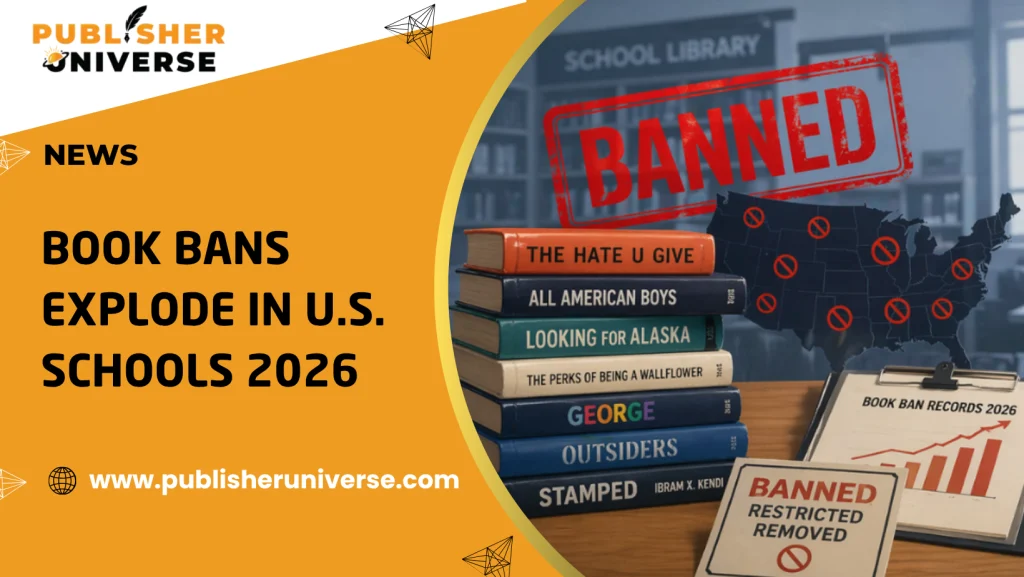
A new report from PEN America highlights a growing concern: book bans are rapidly increasing across U.S. schools. As a result, students now have limited access to diverse content, and authors face new barriers in sharing their work.
For writers and readers alike, this is no longer just a headline—it is becoming a serious challenge that directly affects access, freedom, and opportunity in the publishing world.
The Real Problem: Stories Are Being Silenced
Across the United States, schools are actively removing thousands of books from libraries. In many cases, these books explore:
- real-life struggles
- diverse identities
- important social issues
As a result, readers lose access to meaningful perspectives that help them understand the world around them. At the same time, authors see their work restricted—often without clear explanations.
Key Issue: When access to stories decreases, awareness and understanding decline as well.
Why This Matters to Authors (A Serious Warning)
For authors, this trend creates real and immediate challenges.
First, your book could face restrictions or bans in certain regions. Additionally, your audience reach may shrink without any warning or control. Furthermore, traditional publishing channels may limit or block your content entirely.
In other words, you may invest months—or even years—writing a book, yet still struggle to get it in front of readers.
Pain Point: You create content to be read, but now distribution is becoming the biggest obstacle.
Readers Are Feeling the Impact Too
This issue does not only affect writers—readers are also experiencing the consequences.
For example:
- students cannot access books they want to read
- libraries offer fewer choices than before
- educational exploration becomes restricted
As a result, readers lose the freedom to discover new ideas, perspectives, and voices.
Key Concern: Limited access leads to limited thinking.
Unexpected Twist: Banned Books Are Gaining Attention
Interestingly, while restrictions are increasing, demand for banned books is also rising.
Many titles are now experiencing:
- higher online sales
- increased demand outside school systems
- viral exposure on social media platforms
Therefore, censorship is unintentionally creating curiosity. However, this opportunity only benefits readers who still have access to these books.
Insight: Restriction often drives interest—but access still controls visibility.
What Smart Authors Are Doing Now
Because of these challenges, many authors are shifting their strategies. Instead of relying only on traditional systems, they are taking control of their publishing journey.
For instance, authors are now:
- publishing independently
- selling directly to readers
- building personal audiences online
As a result, they reduce dependence on platforms that may limit their reach.
Solution Mindset: Control your distribution, and you control your success.
Turning the Problem into Opportunity
Although book bans present challenges, they also create new opportunities for authors willing to adapt.
Today, successful authors focus on:
- full ownership of their content
- direct communication with readers
- strong personal branding
In addition, tools like eBook platforms and digital marketing allow authors to bypass traditional gatekeepers.
Smart Strategy: Independent publishing + digital distribution + audience building = long-term control.
Industry Warning: What Comes Next
Experts believe this trend may continue to grow in the coming years. Consequently, the publishing landscape could face:
- increased censorship
- stricter content regulations
- a wider gap between traditional and independent publishing
Therefore, authors must prepare for a future where visibility depends on strategy—not just quality.
Final Thoughts
Book bans in 2026 represent more than a temporary issue—they signal a major shift in how content is controlled and distributed.
The reality is simple:
- If you rely only on traditional systems, your reach may become limited.
- However, if you build your own platform, you maintain full control.
Ultimately, the power is shifting toward creators who take ownership of their work and distribution channels.